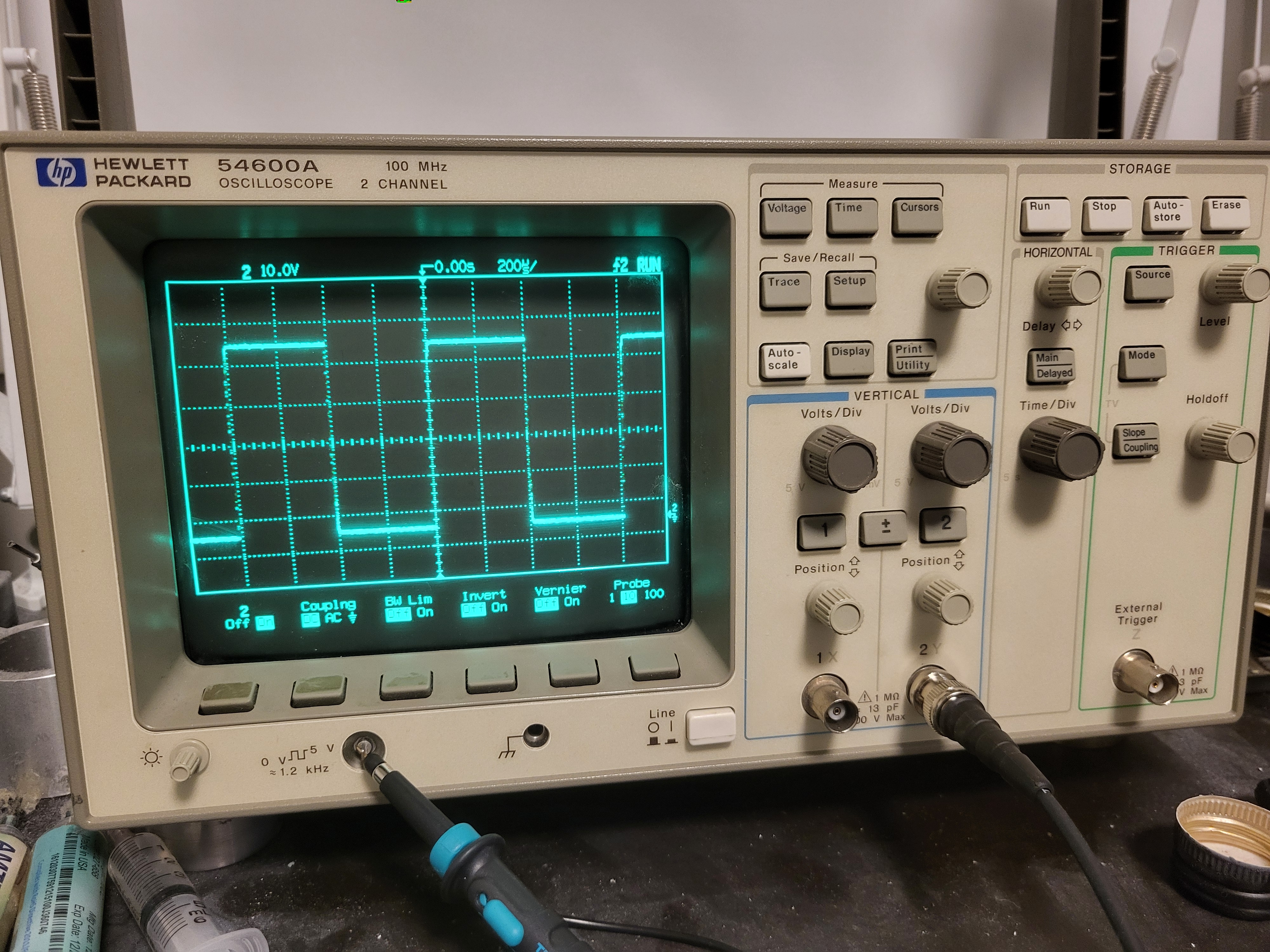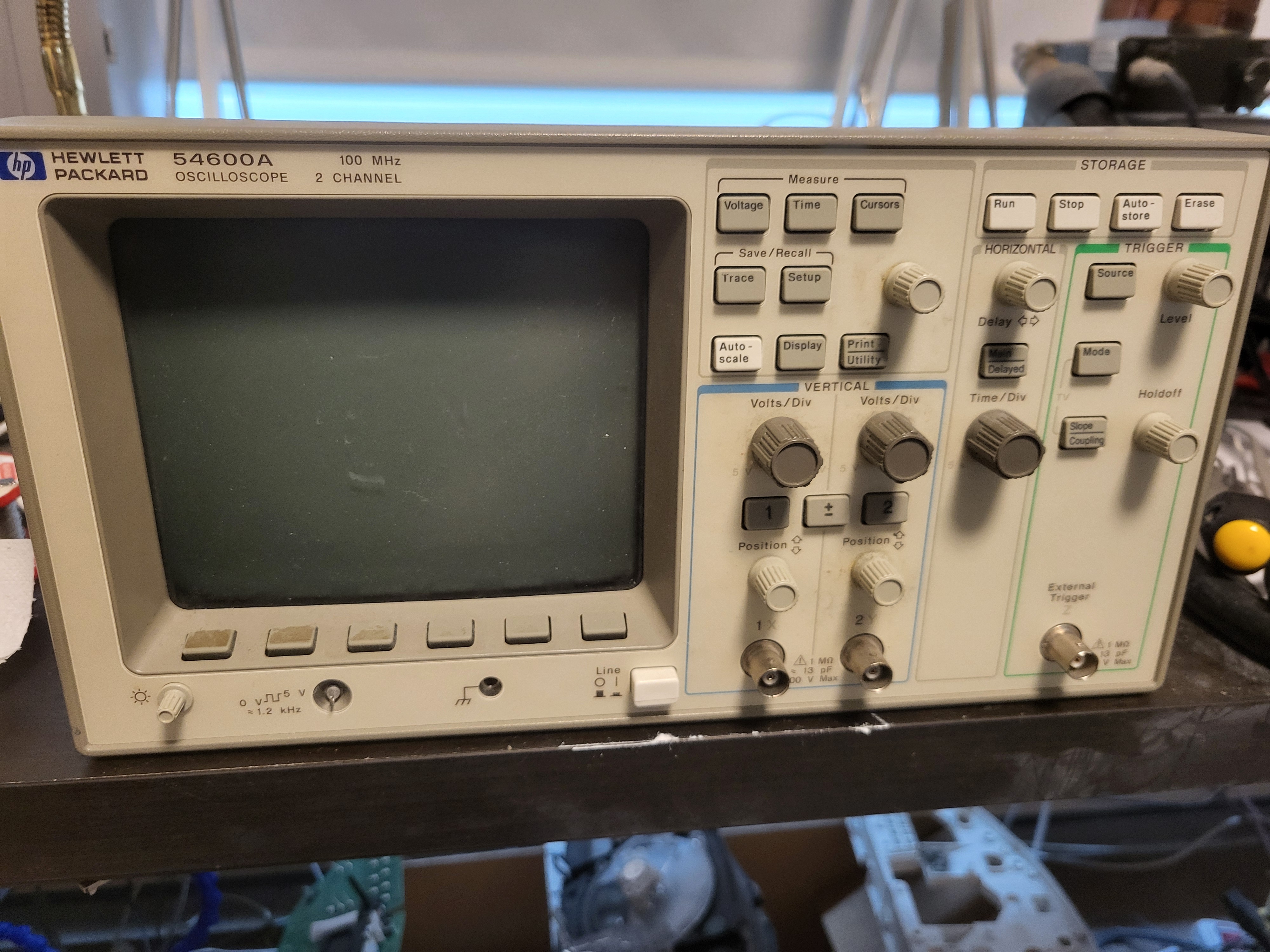
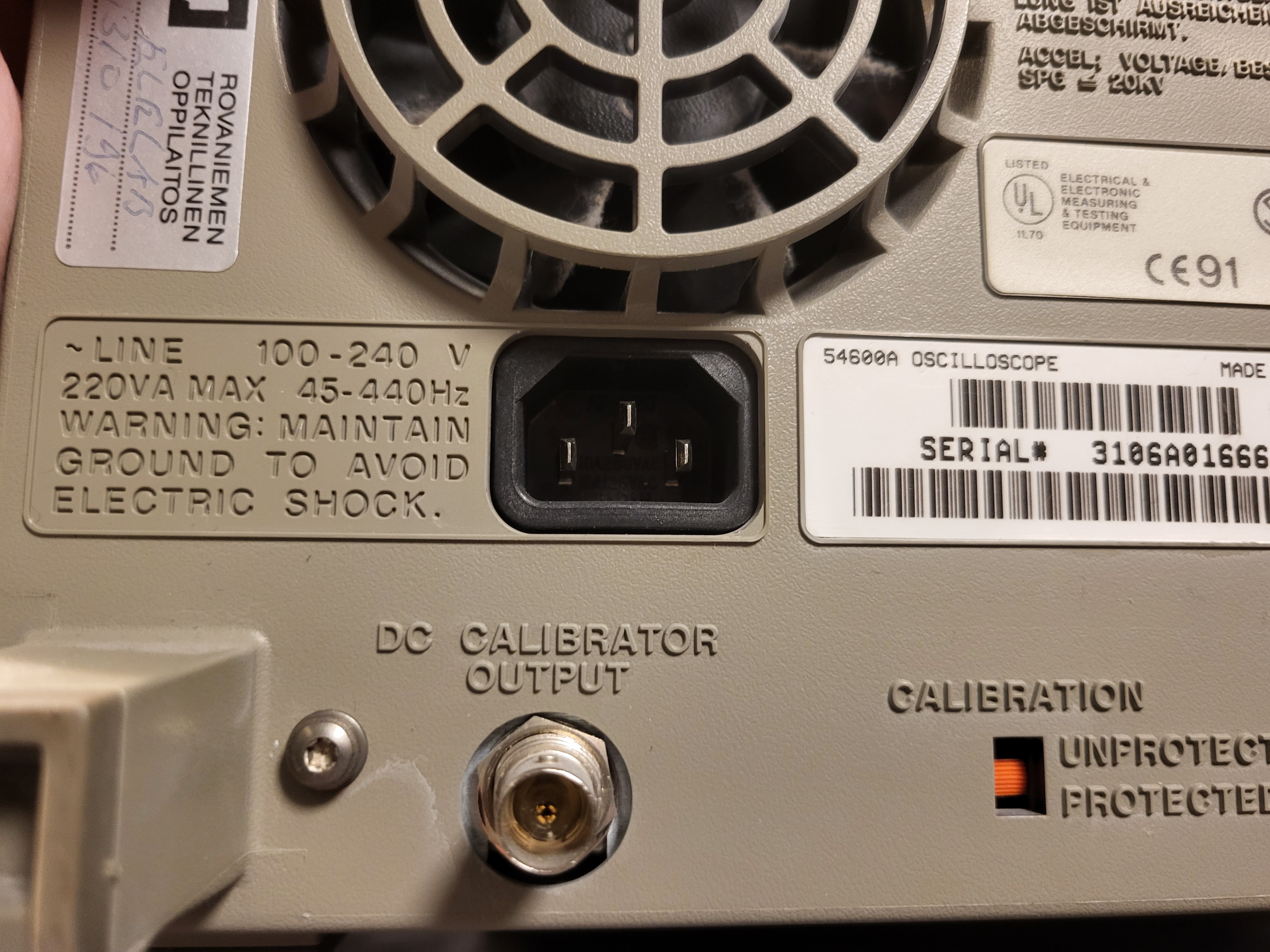
I switched from a USB scope to a physical oscilloscope when I wanted to fiddle with physical buttons and see a faster response time. The HP 54600A scope enters the picture which fulfilled my interest very well. Good and smooth user interface. These models mostly now warn that it's no longer up-to-date because 100MHz doesn't tell everything and one limitation is 20MS/s. Although theoretically you can make a diode sampler to see somewhat faster signals.
Fixes
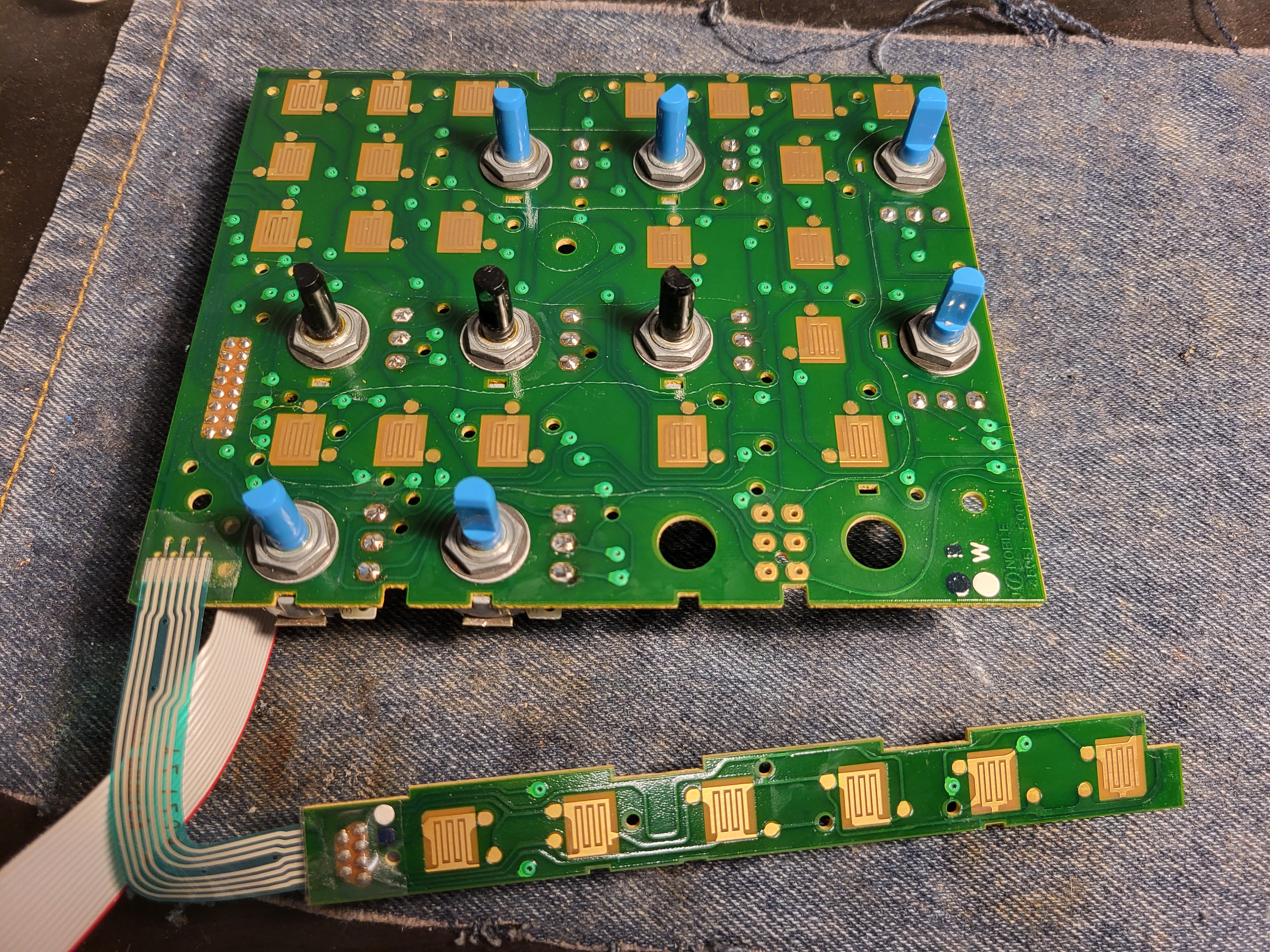
One that immediately caught my eye was grease / oil on the knobs - where did it come from? When turning some of the knobs the selection jumps and precise adjustment is very difficult. Well maybe the previous owner made a mistake so this one doesn't use trim pots for adjustment but rotary encoders that create pulses. The encoder manufacturer is Noble, a Japanese company that's still in business but their USA contact has been inactive for a while when I tried to ask for more information.
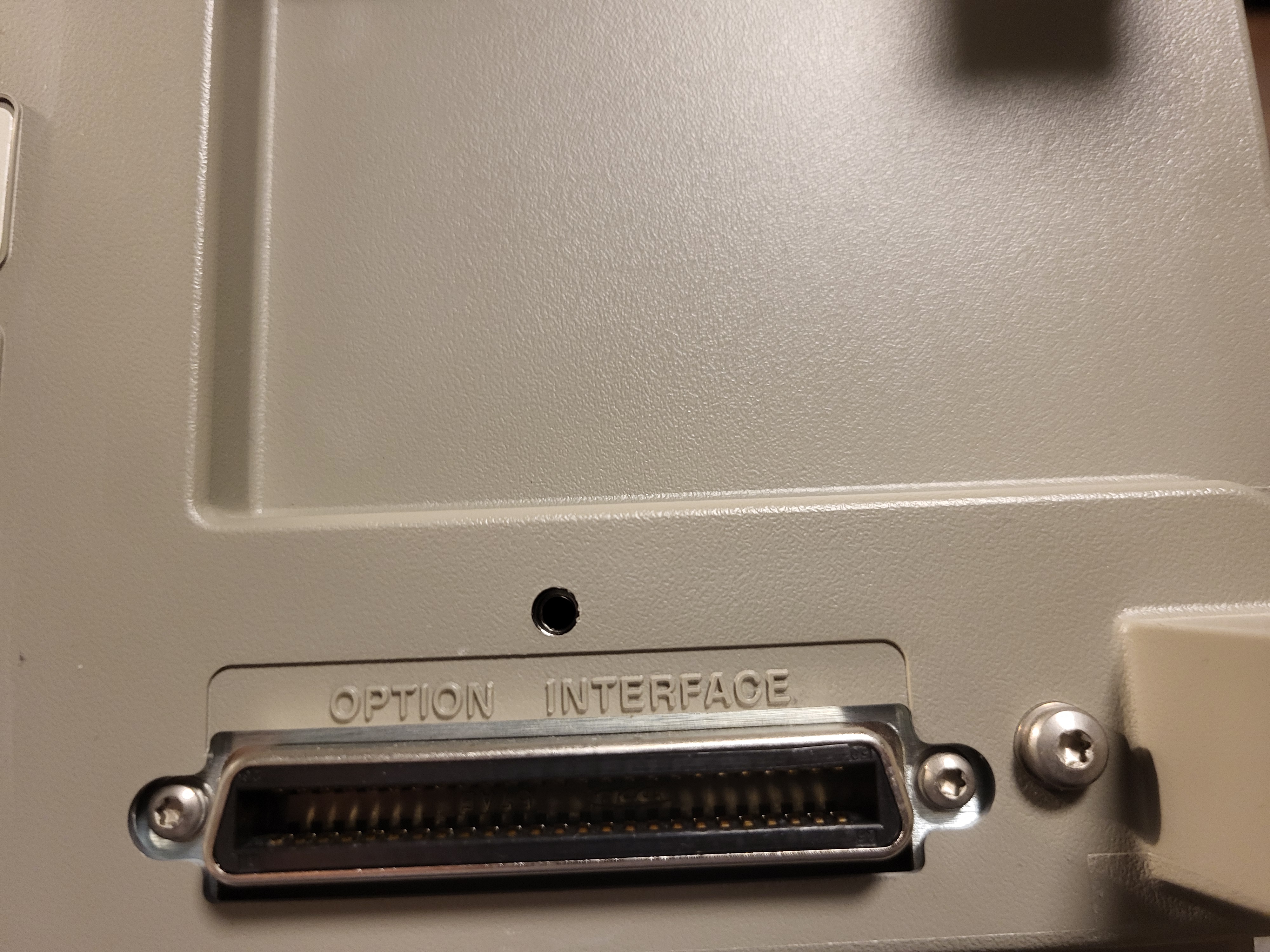
Some were found on Chinese sites 1-2-16, 1-2-36 rotary encoder (knob - 6mm diameter, 14mm long). I understood that much that they mean encoders with 16 or 36 pulses per revolution but I didn't go ahead and order them this time. The device's enclosure comes off when you remove any possible add-on module and two torx screws, and the front panel comes off by bending two plastic clips so the front panel can fold away from the bottom corner.
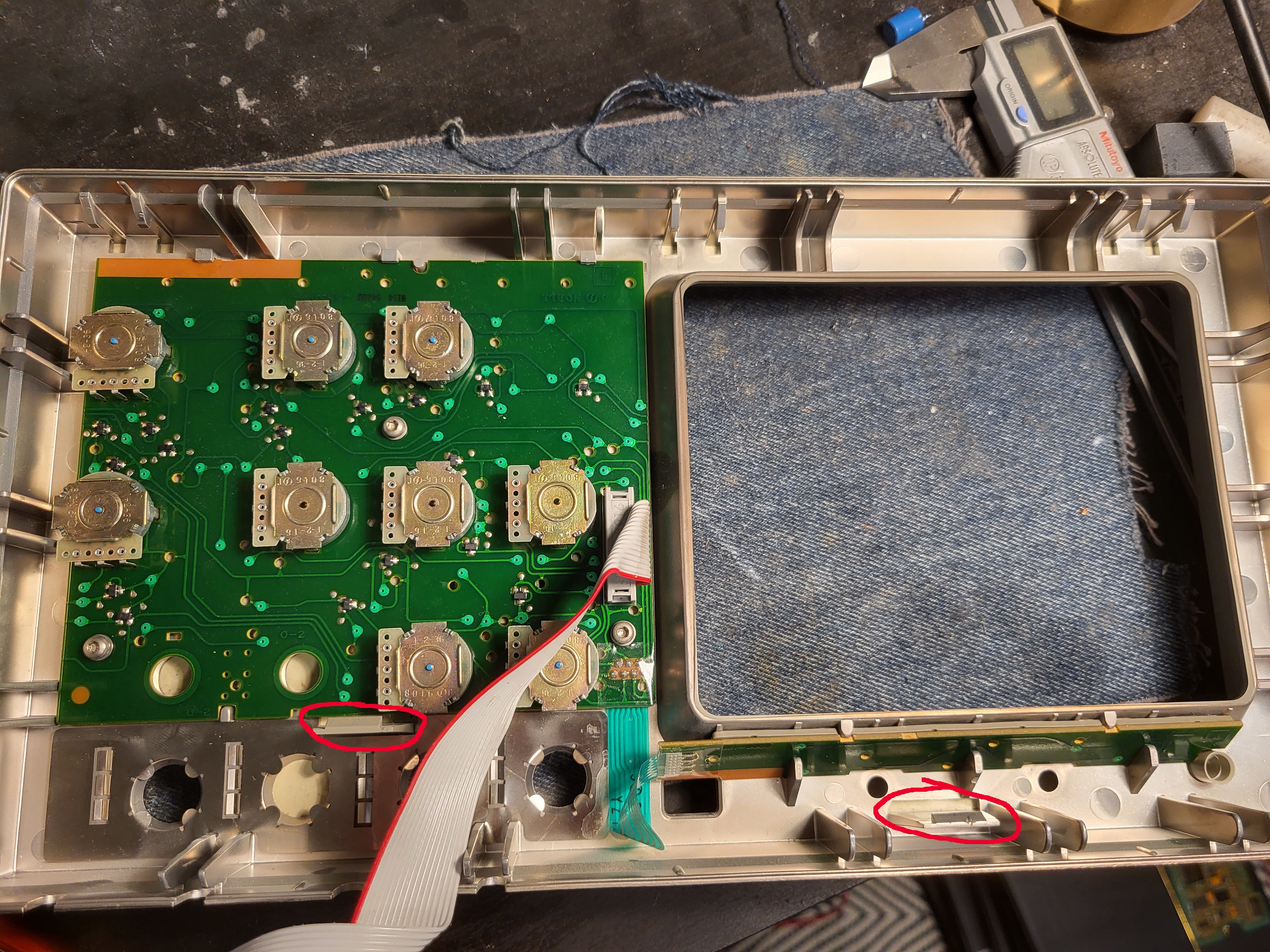
The actual repair. Soldering the encoders off, disassembly and cleaning with cotton swabs and IPA, then assembly.. you can't do this many times and have it hold together again. The base is attached to the encoder body's small bending parts, most of which broke but still held on.
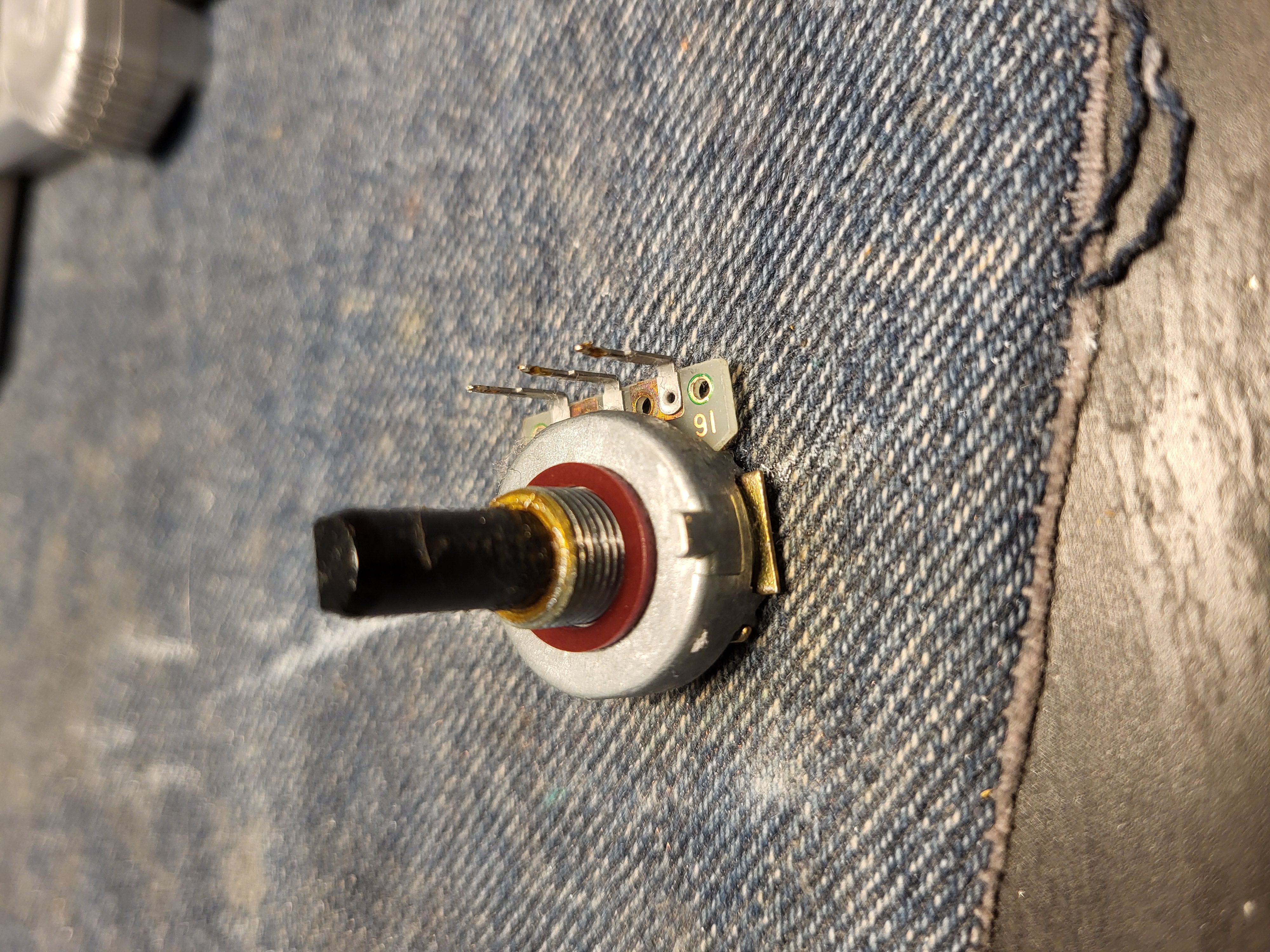
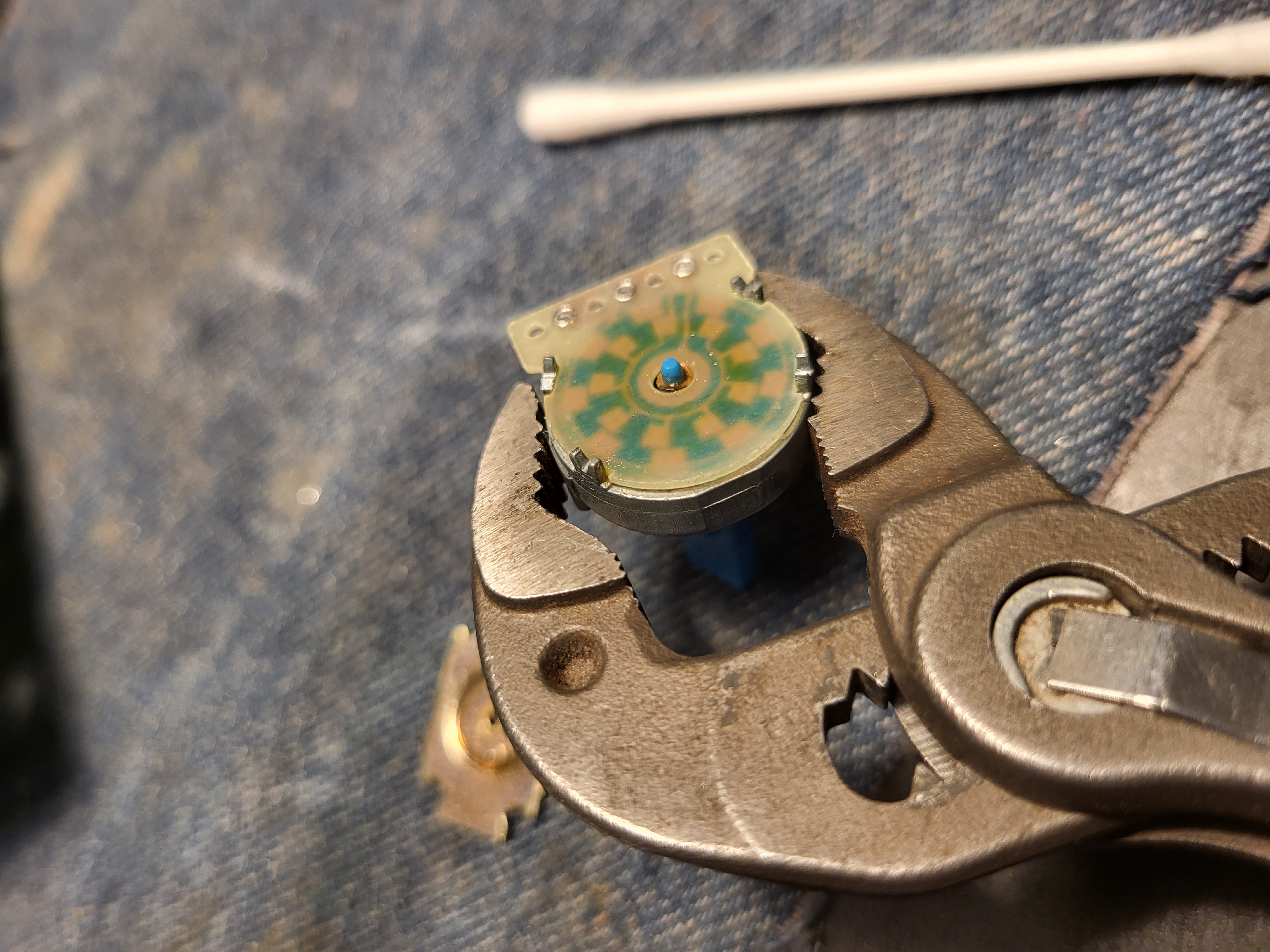
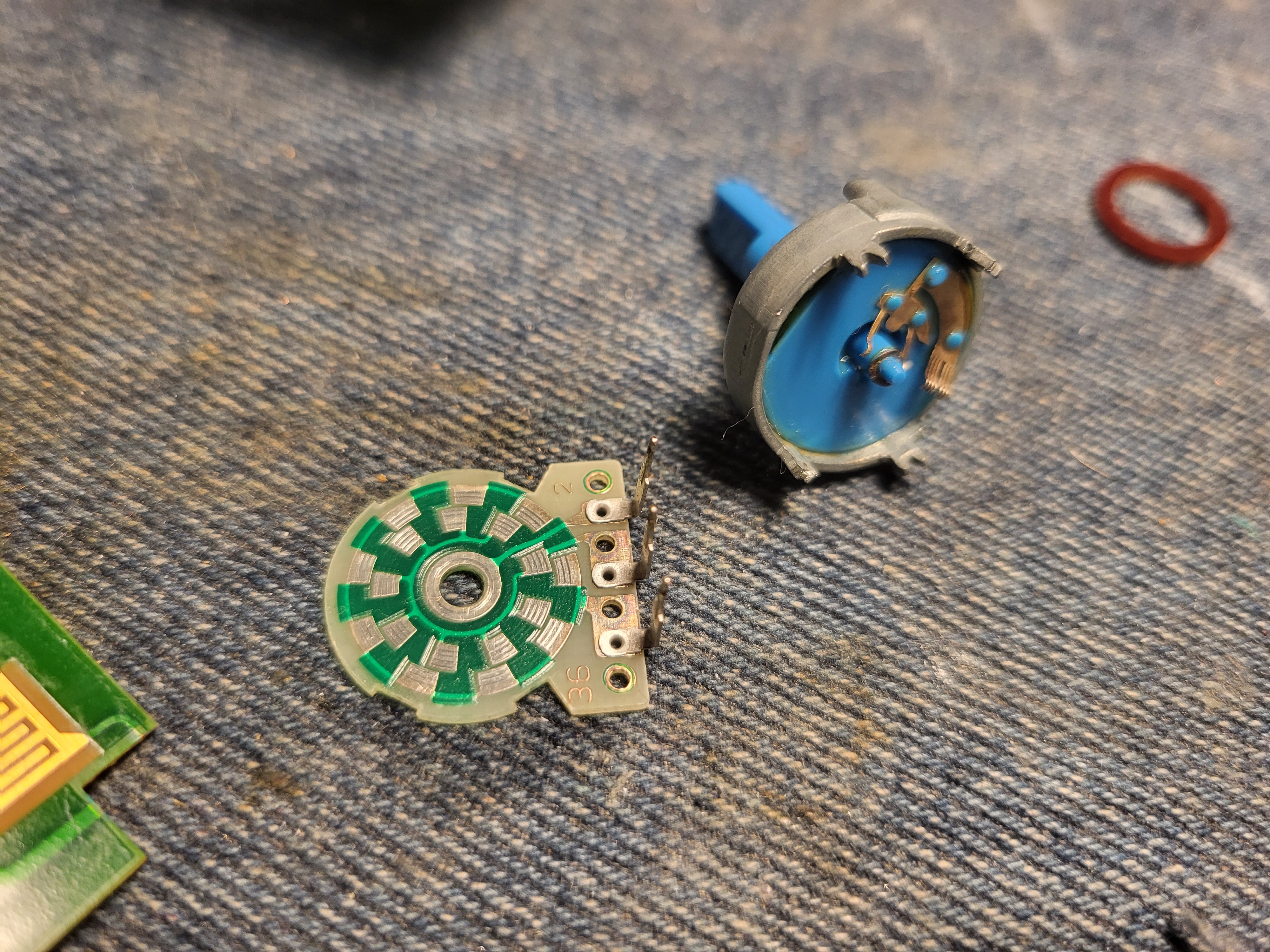
Also not all buttons were working so I cleaned those with IPA too and put everything back together and the result was once again a working oscilloscope where buttons and knobs work without issues. Good savings.. only a bit of time was spent.