The EEC-IV cannot be reprogrammed without erasing the EPROM with a UV Eraser and using a difficult-to-find chip programmer to reprogram it (the J3 port can apparently be used to program a blank ECU). The most difficult step is the programming, since the EPROM is a special order from Intel for Ford, and unlike standard chips, the ROM addressing is done internally, which requires a special decoder connected in parallel.
The newer EEC-V uses EEPROM, making this much easier, and programming can also be done via DLC/OBD. Ford removed the J3 port in 2005 *.
On a Russian forum, someone encountered what may be a factory-modified EEC-IV that has an added socket so that the EPROM can be swapped.
Ready-made chips circulate under names like Superchips/Powerchip/Bayjoo Chip/Evolution Chips. QuarterHorse is the most advanced option in terms of features (emulator, meaning it can for example change values on the fly, search for maps, or provide real-time diagnostics for all J3-port EEC-IV/V devices) without being the most expensive option. The only flaw with these has been a depleted battery (the early versions had an assembly error in one resistor that was too small, which drained the battery too quickly), which causes corrupted firmware. For that reason, they are recommended only for tuning, not as a permanent chip.
Hax programmer** was an attempt to program the i8763 EPROM. Dale Ulan is probably the first person to ever re-program the i8763 EPROM. Thomas Tornblom made his own programmer and has had success programming the EPROM*. Andrew March or Tom Cloud tried their own HAX Mk II programmer based on Thomas work. But the pages remain unmaintained and the effort yielded no results.
I contacted Thomas Tornblom by email and he states directly:
As I never got it to work reliably I didn't put it up on the new webserver when I had to move from the old site.
Cheers,
Thomas
The history of EEC hacking also has its casualties - at least one person was taken to court by Ford for distributing the contents of a complete EEC-IV ROM and received a six-figure fine.
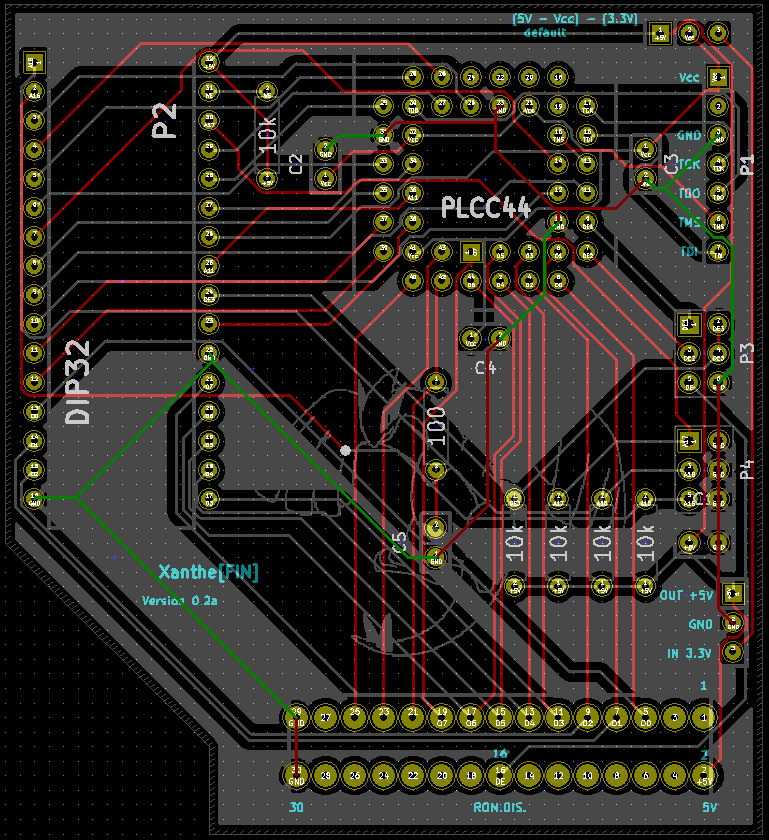
I decided to bypass the original EPROM chip via the J3 test/maintenance port using a J3 adapter. A ready-made adapter can be acquired for as little as $60 (Moates F3) and the official Jaybird programmer for it costs $70. I built Andrew J. March homebrew version (logic handled by an Xilinx XC9572 CPLD), which is based on a J3 adapter designed by someone named Kevin Timmermann (implemented with 74HC logic chips). Andrew and Kevin versions use a 27C512 (512Kb) EPROM as memory, which I replaced with an AM29F040B (4Mb/4096Kb) EEPROM to enable running multiple programs. One program size is 64kB, and with offsets, up to 8 selectable programs can fit on the chip. I took the idea for selecting the EEPROM memory area from this source.
I created a schematic in KiCad and had ready-made PCBs manufactured through iTead Studios, with the help of screwdriver bench articles ( this one and this one ). The JTAG pins enable programming the logic chip using an FT232 Breakout Board USB stick, which costs around 6 dollars on eBay. However, a tip: it is worth buying the more expensive FT2232 with broader support and functionality. For the memory chip I chose DIP32 packaging for visibility, and for the programming device I found the USB MiniPro TL866CS, which costs 37.11 euros and can also program many other chips.
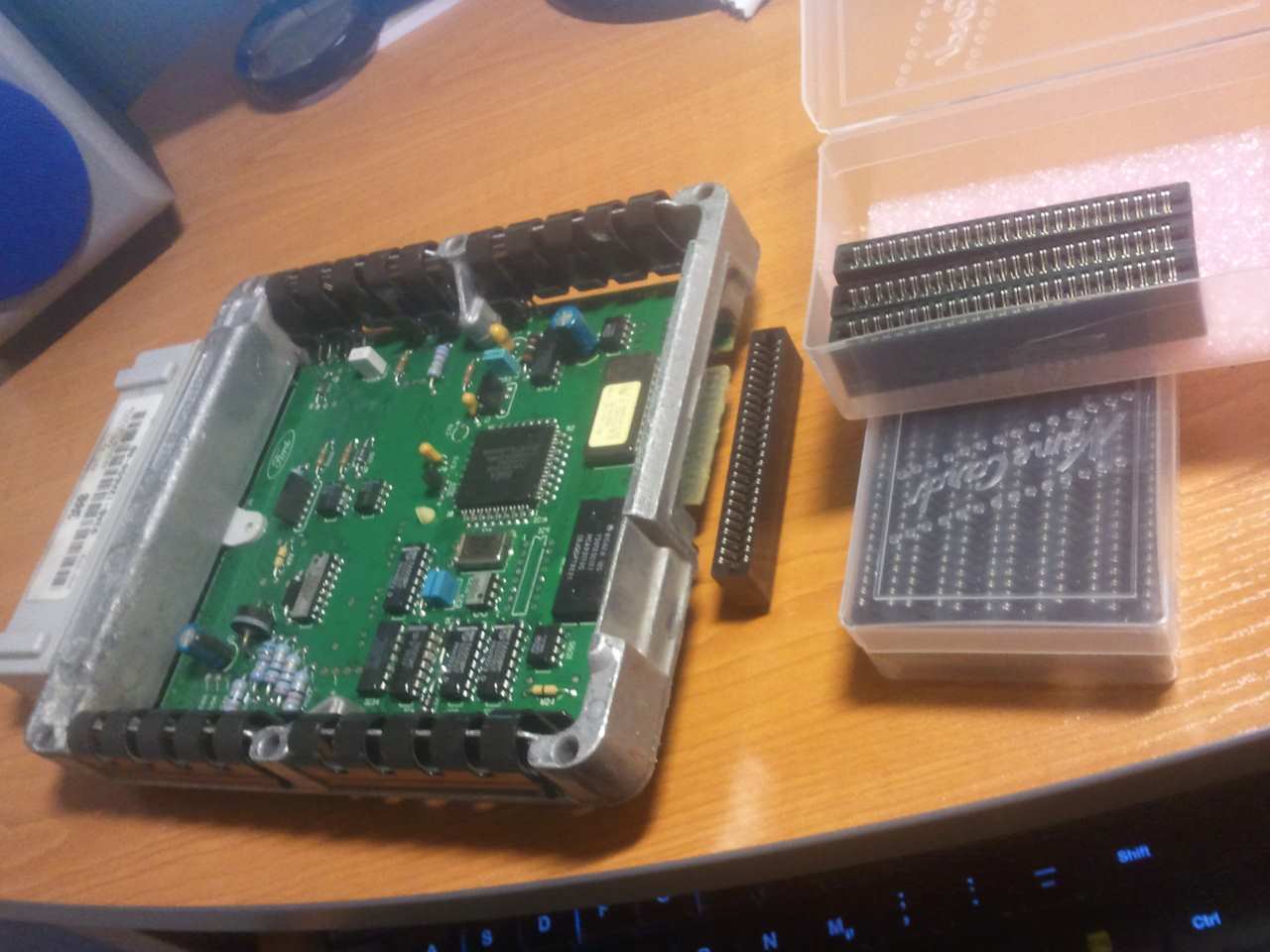
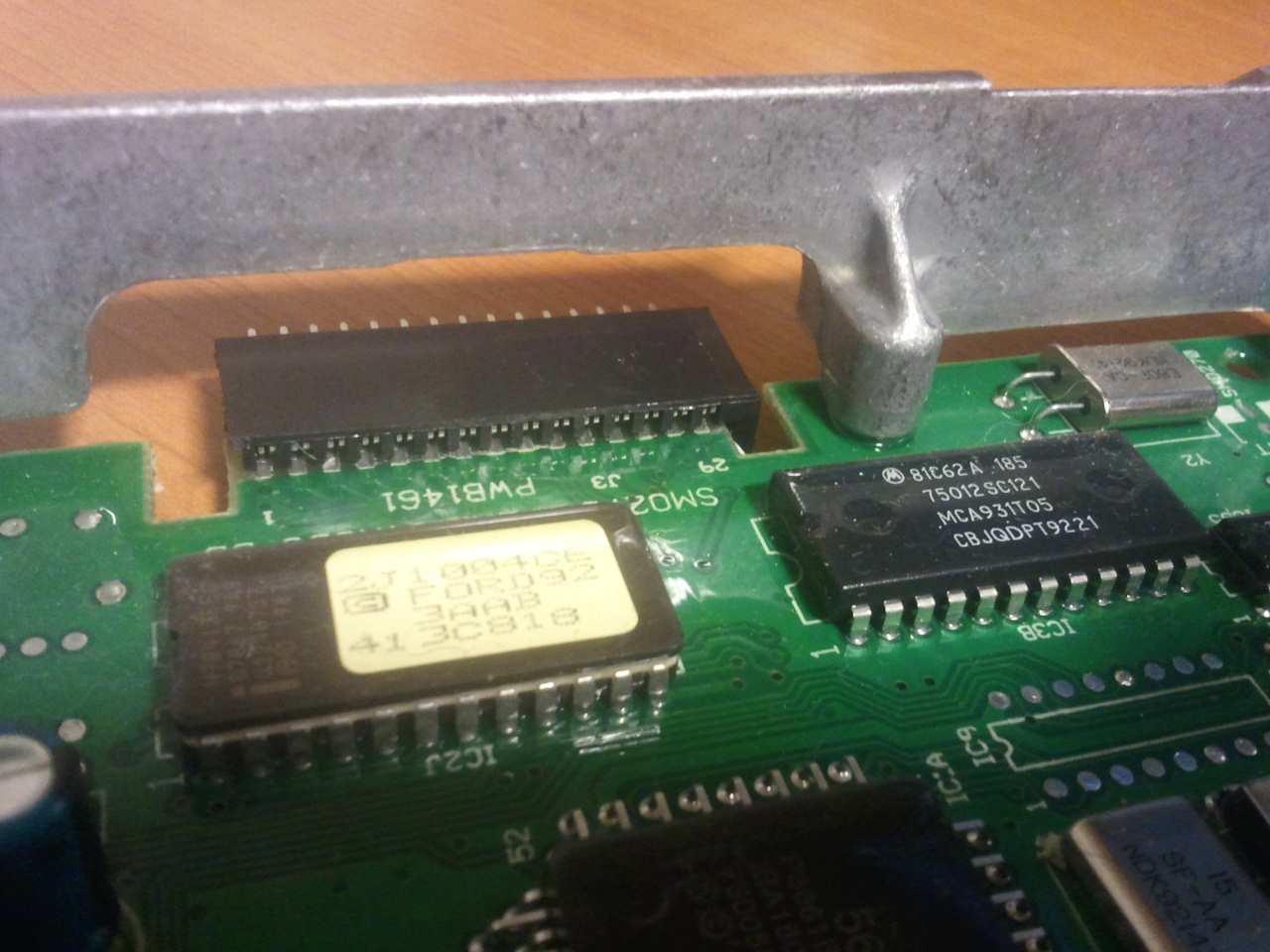
Late-night eBay orders... But the problem of sawing things apart is over, and I got a couple of extra connectors. I could not find 30(2x 15)pin card edge connectors with 2.54mm/0.1 pitch and 0.2 row spacing anywhere else. So I had to order these. These days I have decided to solder the chip directly inside the ECU since poor contact manifests as the car stalling.
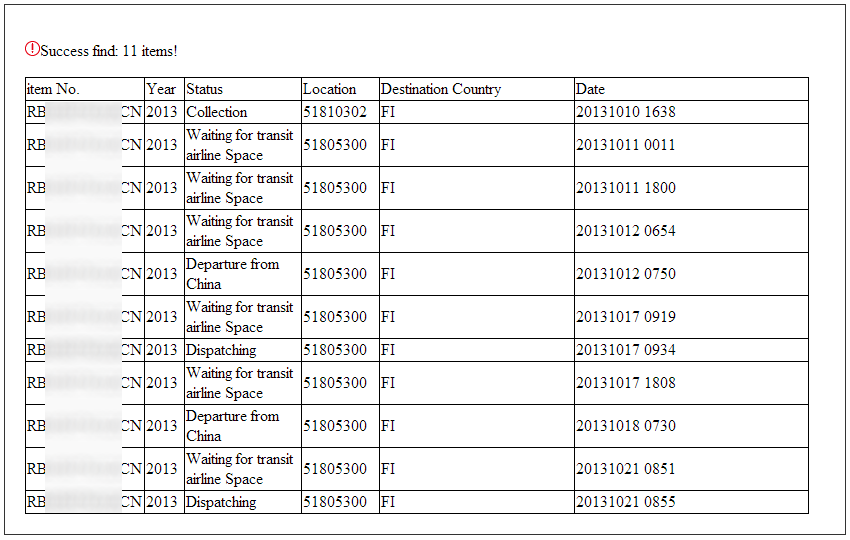
Waiting for the PCBs... Order placed on September 30. Shipped from the factory on October 10. China Air Mail did not treat the package kindly, and iTeadstudio had to change the carrier to Hong Kong Post on November 6, from which the package arrived on November 12. (Later I noticed in an eBay listing that something had blown up at Hong Kong Post.)
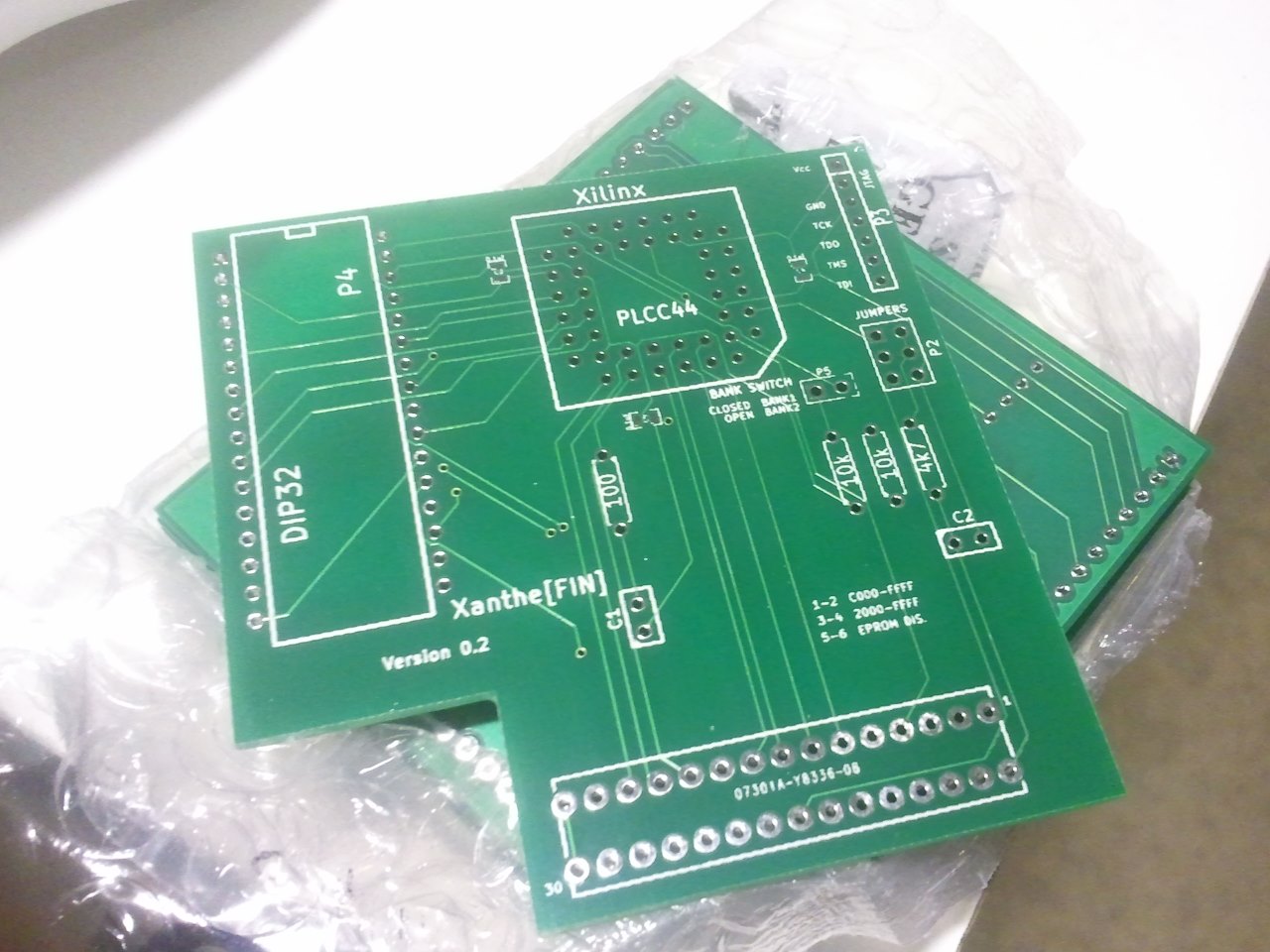
Apparently I destroyed one spare EEC-IV box by connecting the adapter rather ineptly. We will be more careful from now on.
I got a new box, and after fixing some minor design errors, it works!
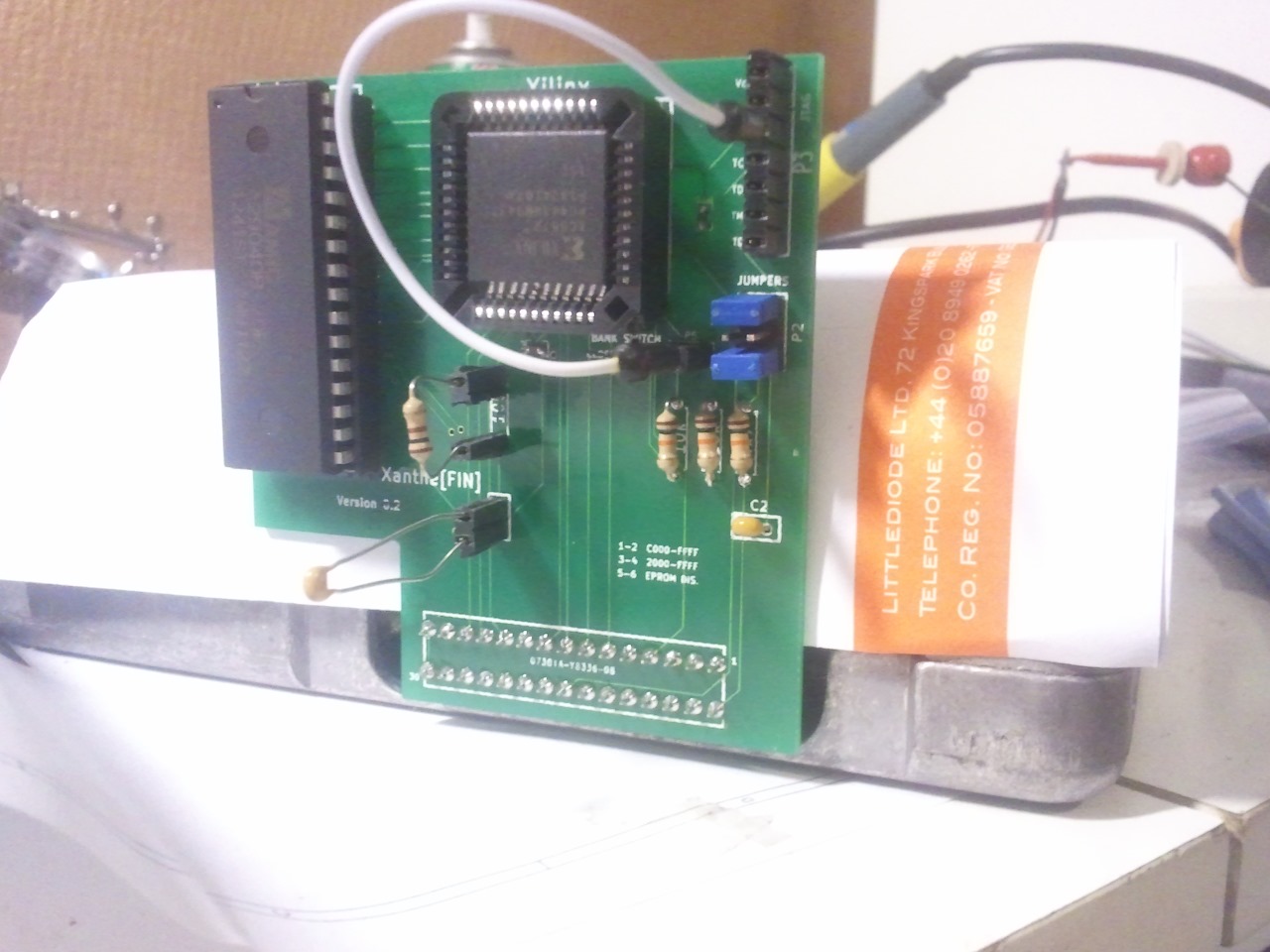
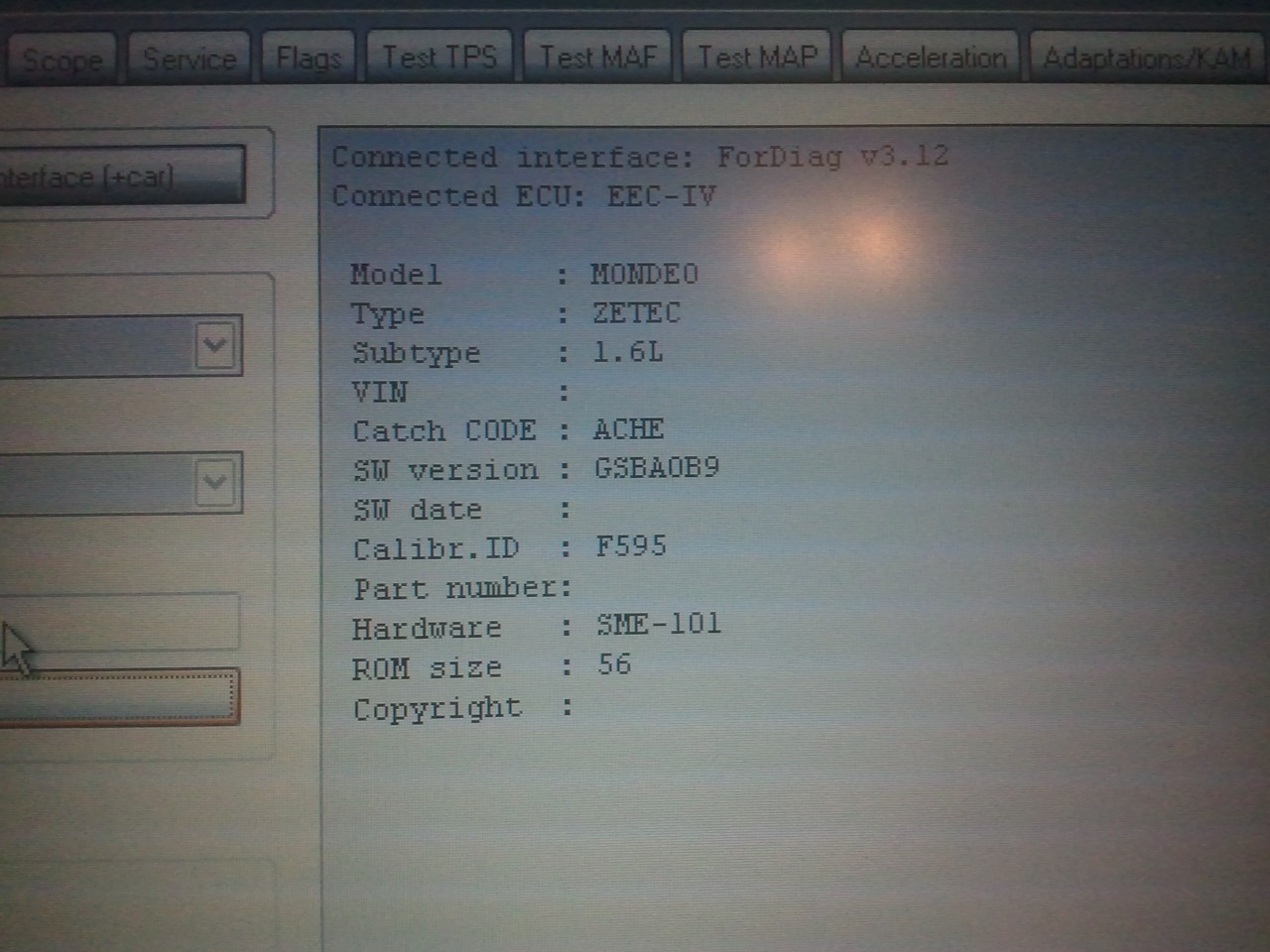
Time to start flashing chips ;)
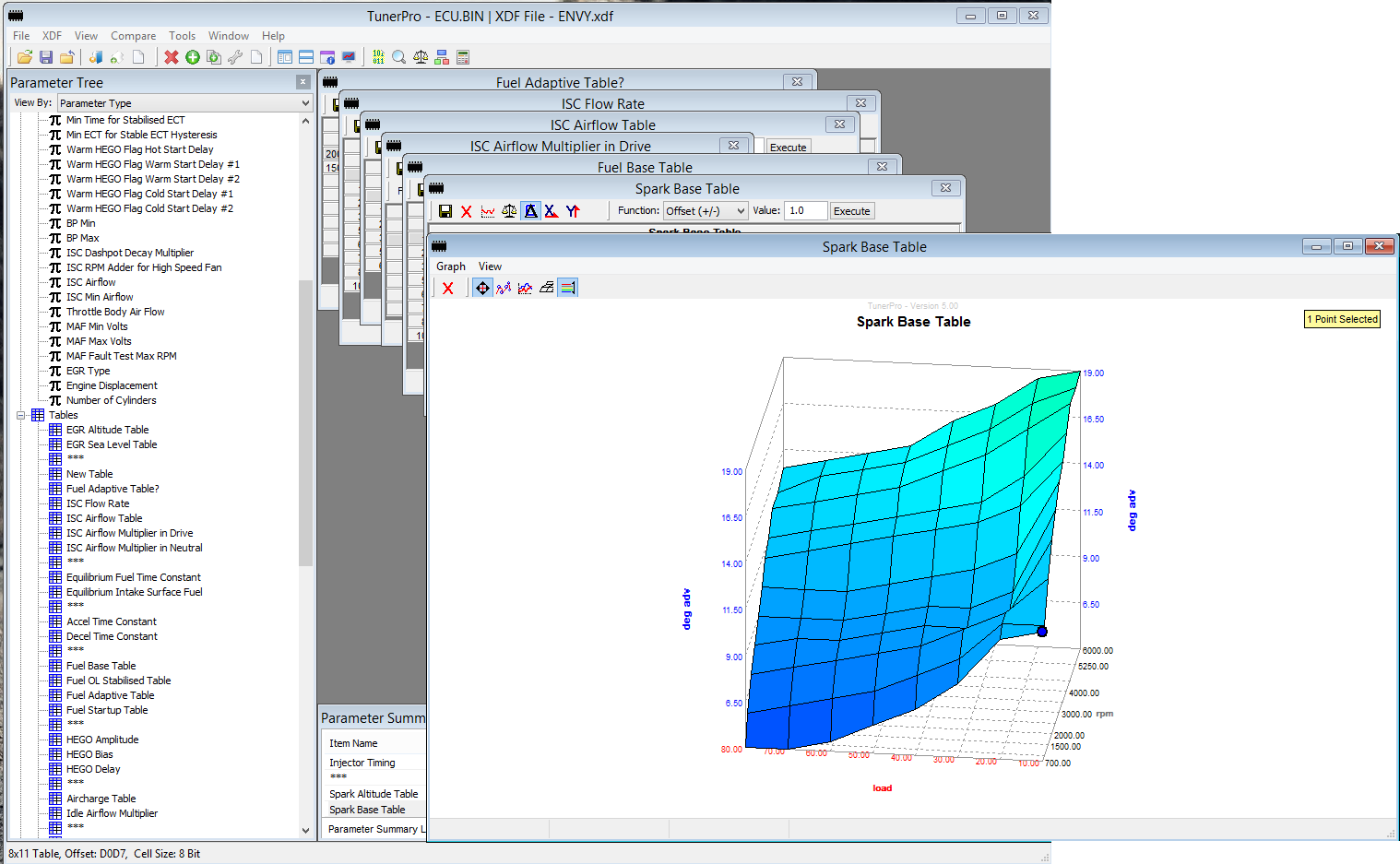
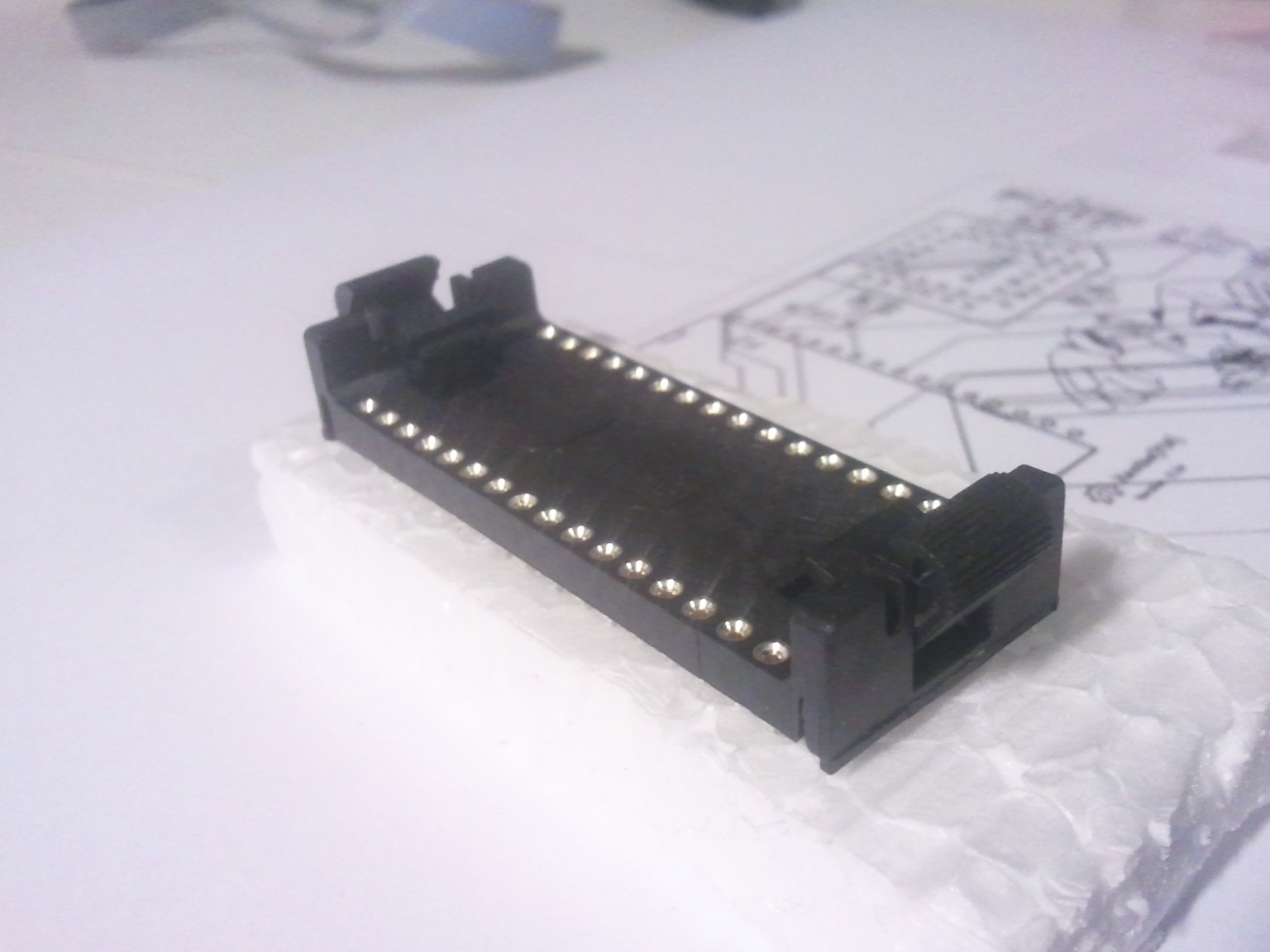
I found a better 32-pin EEPROM socket for continuous swapping. I added an external power supply option for the logic chip since 5V Xilinx chips have been out of production for quite some time and can only be found on eBay anymore. I replaced the SMD components with through-hole parts. I added the A16 pin selection so that all eight separate programs can be used on a 4Mb chip, not just four, and fixed the pull-up resistors to be correct so that no jumper wires are needed ;)
The newer iTead Studios ordering process was much faster since the carrier was DHL Express.
April 18 - iTead received the Gerber files.
April 30 (Wednesday) I received the package.
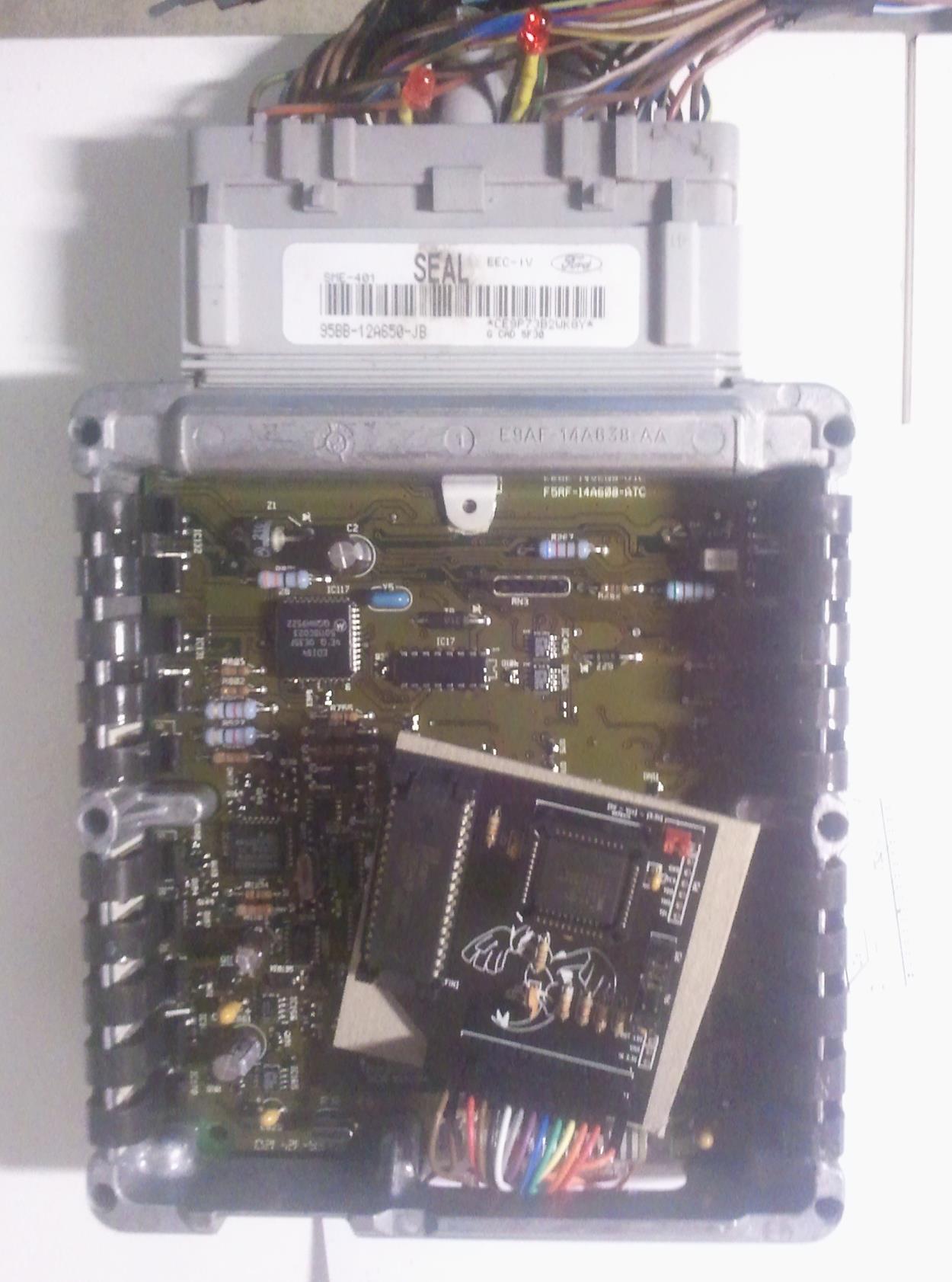
Alright! It now works as it should, and the chip can be placed fully inside.
Related links:
Andrews EEC-IV pages *.zip *
HAX Mk II programmer
Moates - F3 Ford Memory Adapter
T.I. Performance J3 Chips
Technical Notes on The EEC-IV MCU